Portugal may not be the first place travelers mention when they start planning a festive escape to Europe, but spend a few days here in December and it quickly becomes clear why it should be.
From late November, cities and towns across Portugal begin celebrating. Lisbon fills its squares and parks with major festive markets; Óbidos turns its medieval center into Vila Natal; Sintra brings Reino de Natal to the hills below its palaces; and Cascais celebrates only a few streets from the Atlantic.
By December, the pastry counters have changed too. Bolo-Rei, the traditional ring-shaped cake topped with candied fruit and nuts, appears everywhere. Sonhos are light fried pastries dusted with cinnamon and sugar; filhoses come in countless versions depending on the region and the family making them; and rabanadas, thick slices of bread soaked, fried, and covered with cinnamon and sugar, return to tables across the country. Ask a Portuguese family where to buy the best Bolo-Rei, and there is a good chance everyone will have a different answer.


The season begins around Advent and traditionally continues through Dia de Reis, Three Kings’ Day, on January 6. Markets, dinners, gatherings with friends and family traditions continue throughout those weeks, giving travelers plenty of time to experience Portugal while the country itself is celebrating.
This is Catarina Duarte from our Portugal by Travelive team built her five-night itinerary around: two nights in Lisbon, two nights based in Óbidos, Sintra or Cascais, and one final night back in Lisbon. During the two-night stay outside the capital, travelers also visit one of the other two festive towns as a day trip, so choosing where to sleep does not mean missing the others entirely. The distances are easy, the itinerary remains relaxed, and the final night in Lisbon keeps the airport transfer simple the following morning.
Day 1 — Lisbon | First of Two Nights
A private transfer brings travelers from Lisbon Airport to their hotel for the first of two nights in the capital. We would deliberately keep the arrival day uncomplicated and let Lisbon provide the introduction. Baixa, Chiado and Rossio are illuminated, and festive markets and seasonal events are taking place across the city; the center is full of locals shopping, meeting friends and heading out for the evening. Travelers can settle in, walk toward whatever catches their attention, and begin the trip without being immediately placed on a sightseeing schedule.
Day 2 — Pastéis de Belém Workshop & Lisbon City Tour | Second Night in Lisbon
The first full day combines a Pastéis de Belém workshop with a full-day exploration of Lisbon. Most travelers already know the pastel de nata, but visiting in December gives us the opportunity to introduce the much wider world of Portuguese festive baking. This is when Bolo-Rei, sonhos, filhoses and rabanadas begin appearing everywhere, and family recipes that have been put away for most of the year return to kitchens and pastry counters.
From Belém, the day continues through Lisbon with its monuments, neighborhoods and historic streets, but we would make sure the seasonal city is part of the experience rather than something travelers only see from the car. There should be time for the markets, a café that looks inviting and whatever unfamiliar pastry has appeared in the window. The best part of visiting at this time of year is seeing the Lisbon travelers came to discover while also experiencing how locals are enjoying their own city in December.
Day 3 — Lisbon to Óbidos, Sintra or Cascais | First of Two Nights
After two nights in Lisbon, travelers choose one of three destinations as their base for the middle of the journey. The structure stays the same, but the character of those two nights changes considerably depending on where they stay. On the following day, we take them to one of the other two towns, giving them a second festive experience without having to change hotels again.
Óbidos — Medieval streets & Vila Natal
A private transfer takes travelers to Óbidos, where they settle in for two nights. During Vila Natal, the historic center fills with seasonal stalls, entertainment and family activities, all within the medieval walls and beneath the castle. It is an easy choice for families and multigenerational travelers, but the reason Catarina recommends staying here rather than treating Óbidos as a day trip becomes obvious later in the day.
Once many visitors return to Lisbon, the town settles into a different pace. Travelers can wander the narrow streets, browse the small shops, return to Vila Natal after dark and sit down for dinner without checking the time for their return transfer. This is also the natural place for ginjinha de Óbidos, the town’s sour-cherry liqueur, often served in a tiny chocolate cup. Finish the ginjinha, then the cup. Two nights give visitors the chance to enjoy both the lively daytime festivities and the quieter medieval town that emerges in the evening.
Sintra — Palaces, Pastries & A Little Mist
For travelers choosing Sintra, the journey from Lisbon includes a half-day visit to Pena Palace before checking into the hotel for two nights. Staying here removes the usual pressure to squeeze Sintra into a single day and leaves time for Reino de Natal, the historic center and the town once the busiest visiting hours have passed.
Sintra has its own microclimate, and that is part of what makes it so distinctive. Clouds and mist can gather quickly around the Serra de Sintra, sometimes wrapping the peaks around Pena Palace before clearing again just as suddenly. On those days, the palace seems to appear and disappear between the trees, while Quinta da Regaleira, with its towers, grottoes and hidden passages, feels even more mysterious through a veil of fog. This is one of the rare places where a little mist can genuinely improve the experience.
There should also be time for two local pastries no visit to Sintra should overlook. The 'travesseiro' is flaky and filled with almond cream, while the smaller 'queijada' is a sweet cheese tart that has been made in the area for centuries. With two nights here, there is no reason to choose between them.
Sintra works particularly well for couples and travelers drawn to history, architecture and places that reward a little wandering. The palaces are spectacular in any season, but add the festive lights, wooded hills and Sintra’s changeable winter skies, and December suits the town remarkably well.
Cascais — Two Nights Beside the Atlantic
A private transfer takes travelers from Lisbon to Cascais, where the festive season unfolds beside the sea. The town is decorated, seasonal activities fill the center and Cascais Christmas Village traditionally takes over Parque Marechal Carmona, while the waterfront and restaurants continue very much as they do throughout the year.
That means a December day can include a walk through the historic center, grilled fish or seafood for lunch and an evening among the festive lights. When the winter sun cooperates, outdoor tables remain a realistic possibility.
Cascais works especially well for couples and families who want plenty to do around them while still having the sea, the waterfront, and the relaxed rhythm of the Portuguese coast as part of their stay.
Day 4 — Discover a Second Festive Town | Second Night in Your Chosen Base
The fourth day gives travelers another side of festive Portugal without asking them to pack their bags again. From whichever town they have chosen as their two-night base, we arrange a private day trip to one of the other two destinations, with the choice tailored to the clients and the seasonal events taking place during their stay.
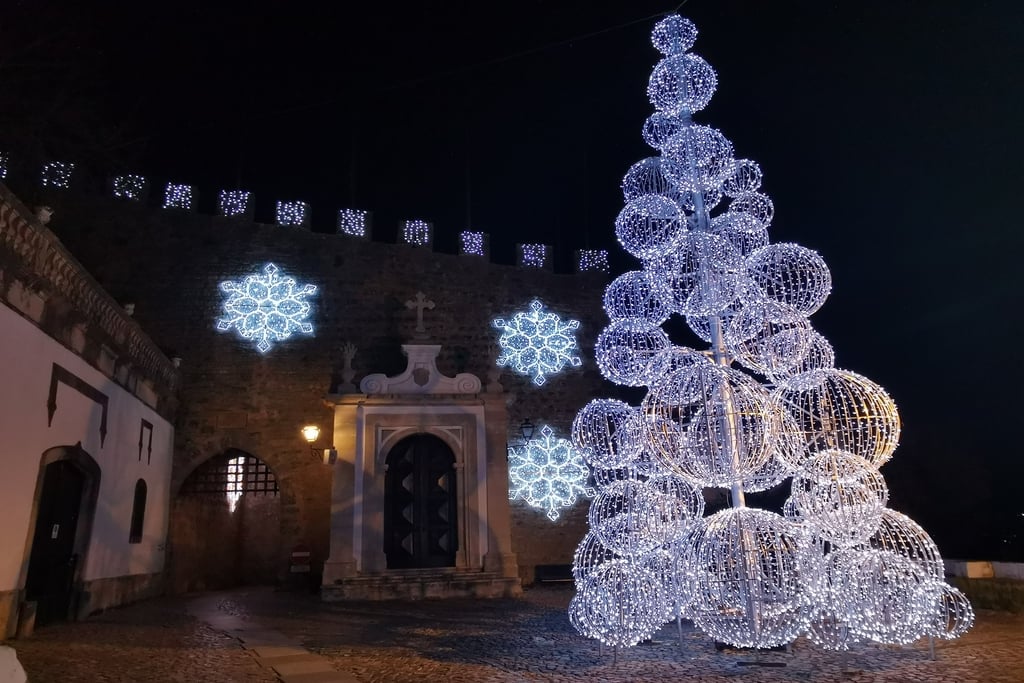
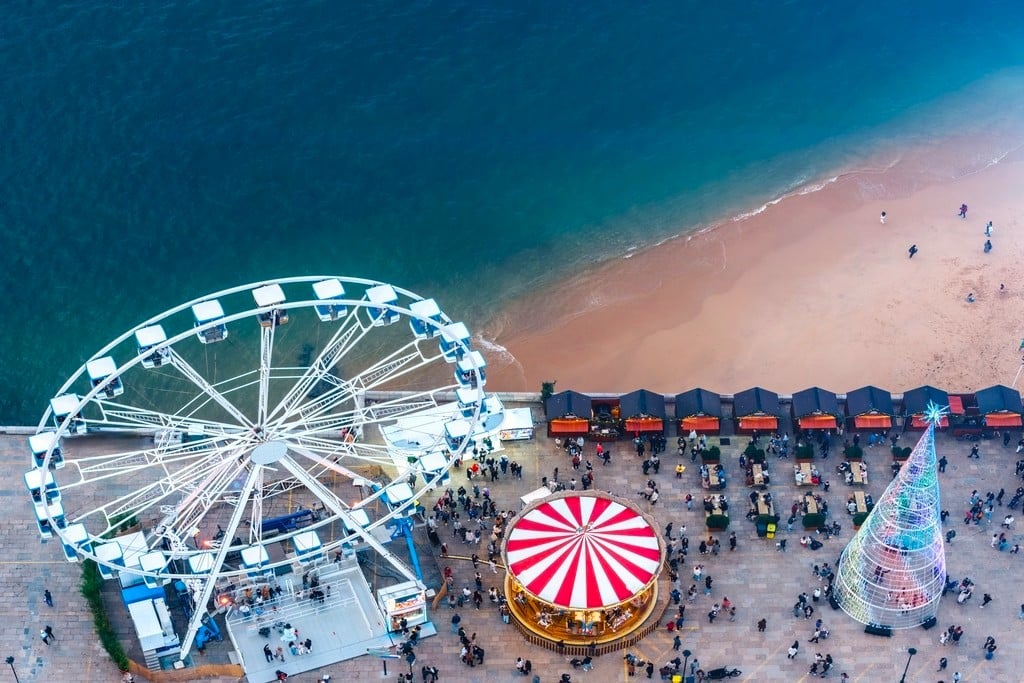
Travelers staying in Óbidos might head to Sintra for Reino de Natal and the historic center, or spend the day in Cascais with the Atlantic and its seasonal celebrations. Those based in Sintra can experience medieval Óbidos and Vila Natal or head down to Cascais for a completely different coastal setting. Guests staying in Cascais can trade the waterfront for Sintra’s palaces and festive town center or spend the day inside the walls of Óbidos.
This way, the overnight option gives travelers the chance to experience one destination after the day visitors have left, while the day trip allows them to discover another. They are not choosing between three places they would like to see. They are choosing which one they would most like to call home for two nights.
Overnight: Óbidos, Sintra or Cascais
Day 5 — Return to Lisbon | Final Night
A private transfer brings travelers back to Lisbon for the final night of the journey. Returning to the capital gives them one last evening in the city and keeps departure day easy, with Lisbon Airport only a straightforward private transfer away the following morning.
For the final experience, Catarina suggests two choices. A half-day gastronomy tour around Bairro Alto and the surrounding historic neighborhoods can include Portuguese wines, cheeses, petiscos and seasonal specialties, while giving travelers more context for the traditions they have been seeing throughout the trip. The Consoada, the traditional Christmas Eve family meal, still brings generations together around tables across Portugal, with bacalhau remaining a familiar centerpiece in many homes. Dessert often means a generous collection of Bolo-Rei, rabanadas, filhoses, sonhos, and whatever family recipe nobody would dare leave off the table.


The alternative is a traditional Portuguese dinner accompanied by Fado, with the evening following the rhythm of a proper casa de fados. Classic Portuguese dishes are served in courses, and the performances take place during the pauses between them. When the singers and musicians begin, service stops and the room falls silent so the music has everyone’s complete attention. Once the performance finishes, dinner resumes until the next Fado begins.
That rhythm is part of the experience. Guests enjoy the food and conversation while the meal is being served, then everything changes when the first notes are heard, and all attention turns to the musicians and fadista. After several days of festive markets, seasonal food and celebrations, it is a very Lisbon way to spend the final evening.
Overnight: Lisbon
Day 6 — Departure From Lisbon
After breakfast, a private transfer takes travelers from their Lisbon hotel directly to the airport. The final night in the capital avoids an early drive from Óbidos, Sintra or Cascais and gives the itinerary a natural ending in the same city where the journey began.
Which Version of Festive Portugal Suits Your Clients?
The strength of Catarina’s itinerary is that the five-night structure remains simple. At the same time, the two nights in the middle can be matched to the traveler, and everyone still gets to experience a second festive town along the way. Óbidos works beautifully for families and multigenerational trips, with Vila Natal and the medieval town providing plenty to enjoy. Sintra suits couples and travelers drawn to palaces, history, local pastries and the particular mood created by its forested hills and changeable microclimate. Cascais is the choice for clients who want the festivities with seafood, sea air and the possibility of a mild December afternoon outdoors.
Lisbon holds the journey together at both ends, with major markets, food, neighborhoods, and enough activity to establish, from the very first evening, that Portugal takes the festive season seriously. Five nights can include Lisbon, two of the three surrounding festive destinations, Portuguese family traditions, medieval streets, palaces, Fado and the Atlantic without turning the trip into a race between hotels.
Portugal may not be the first destination travelers name when they begin planning a festive trip to Europe. After experiencing it this way, it becomes very easy to wonder why.